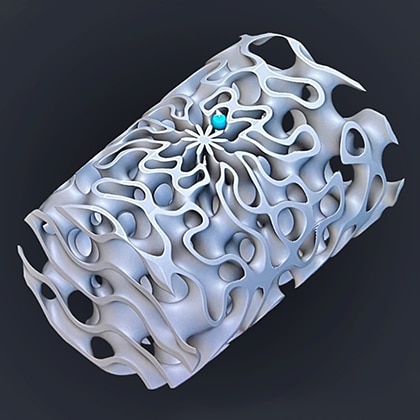
KERVALION develops 3D-printed bone grafts, custom-designed from patient scans.
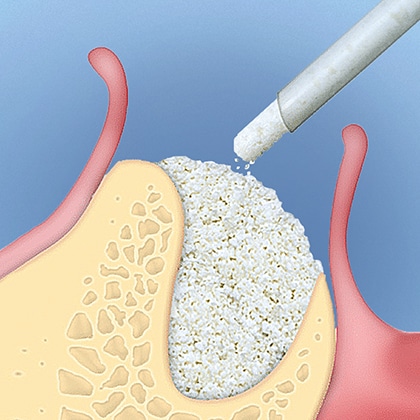
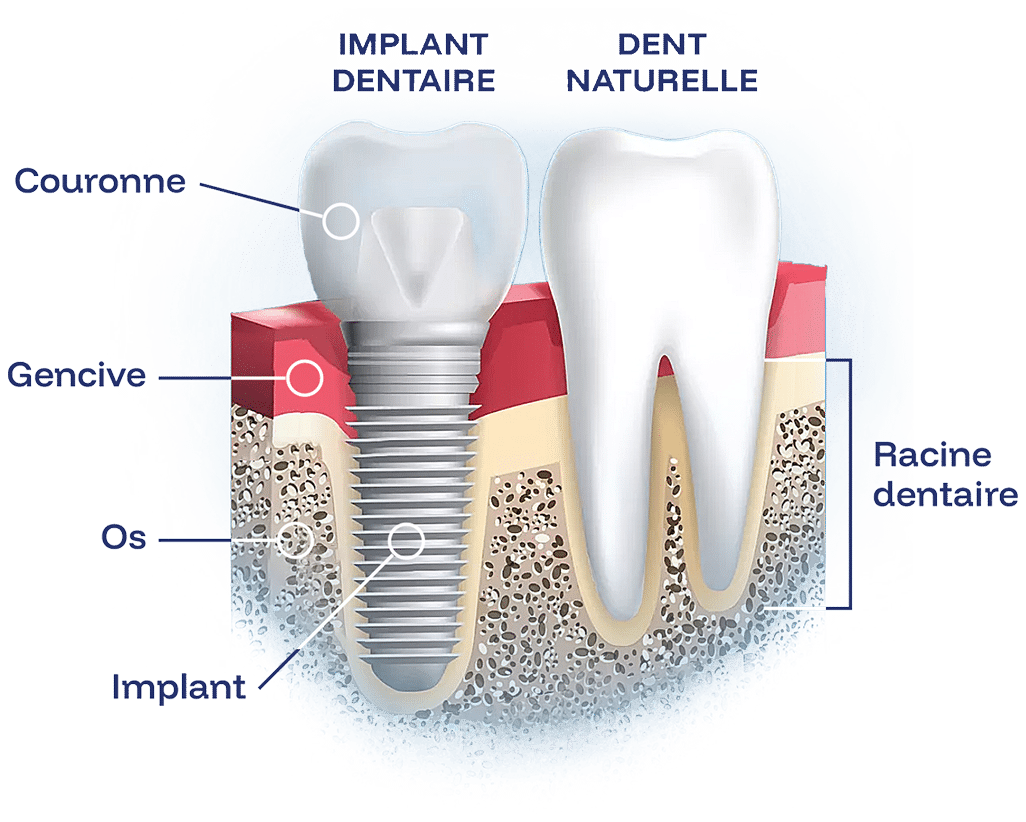
Initially intended for dental pre-implant surgery, these grafts aim to address bone deficiencies that preclude the placement of dental implants. Thanks to personalized manufacturing, they achieve a perfect fit in both shape and volume, simplifying the procedure and reducing the number of surgical interventions required. KERVALION's innovative material ensures excellent tolerance while promoting reliable bone regeneration.
This technology offers practitioners an easier, faster, and more cost-effective solution, thereby making bone grafting accessible to a wider range of professionals, while simultaneously enhancing patient comfort.

Dental caries in permanent teeth affect over 2 billion people worldwide, and annually, 2 million dental implants are placed in Europe.
Currently, bone reconstruction methods include:
– Autografts, considered the « gold standard »
– Allografts (of human, animal, or synthetic origin)
However, these techniques present several disadvantages:
– They require intervention by specialized surgeons
– They involve multiple operations (3 to 4 on average)
– They necessitate a long treatment time (6 to 12 months)
– They incur significant costs (up to €1,500)
– They carry a risk of infection
– They exhibit a non-negligible failure rate (10 to 20%)
KERVALION offers a novel, ready-to-use solution for treating patients suffering from dental bone resorption. Utilizing 3D printing, we design personalized bone substitutes tailored for each patient. KERVALION employs 3D printing to shape the biomaterial, enabling unparalleled precision in graft fabrication. This advanced technique ensures the production of a bone graft with optimal biological and mechanical properties, which are crucial for successful grafting. This innovative approach promises to revolutionize the field of pre-implant surgery by providing a customized, effective, and less invasive solution for patients requiring bone reconstruction prior to dental implant placement.
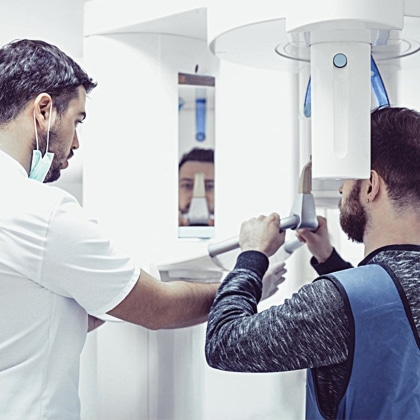
The graft is designed from a scan to ensure perfect morphological adaptation, thereby optimizing integration and outcomes.
This technology allows for reducing the intervention to a single surgical procedure, significantly decreasing treatment time and patient discomfort.
The KERVALION bone substitute
offers biological and mechanical properties equivalent or superior to existing solutions, ensuring effective and efficient bone regeneration.
The global dental bone graft market is experiencing significant growth, with a compound annual growth rate (CAGR) between 6.8% and 9.2%, reflecting the increasing importance of bone reconstruction procedures in the dental field.
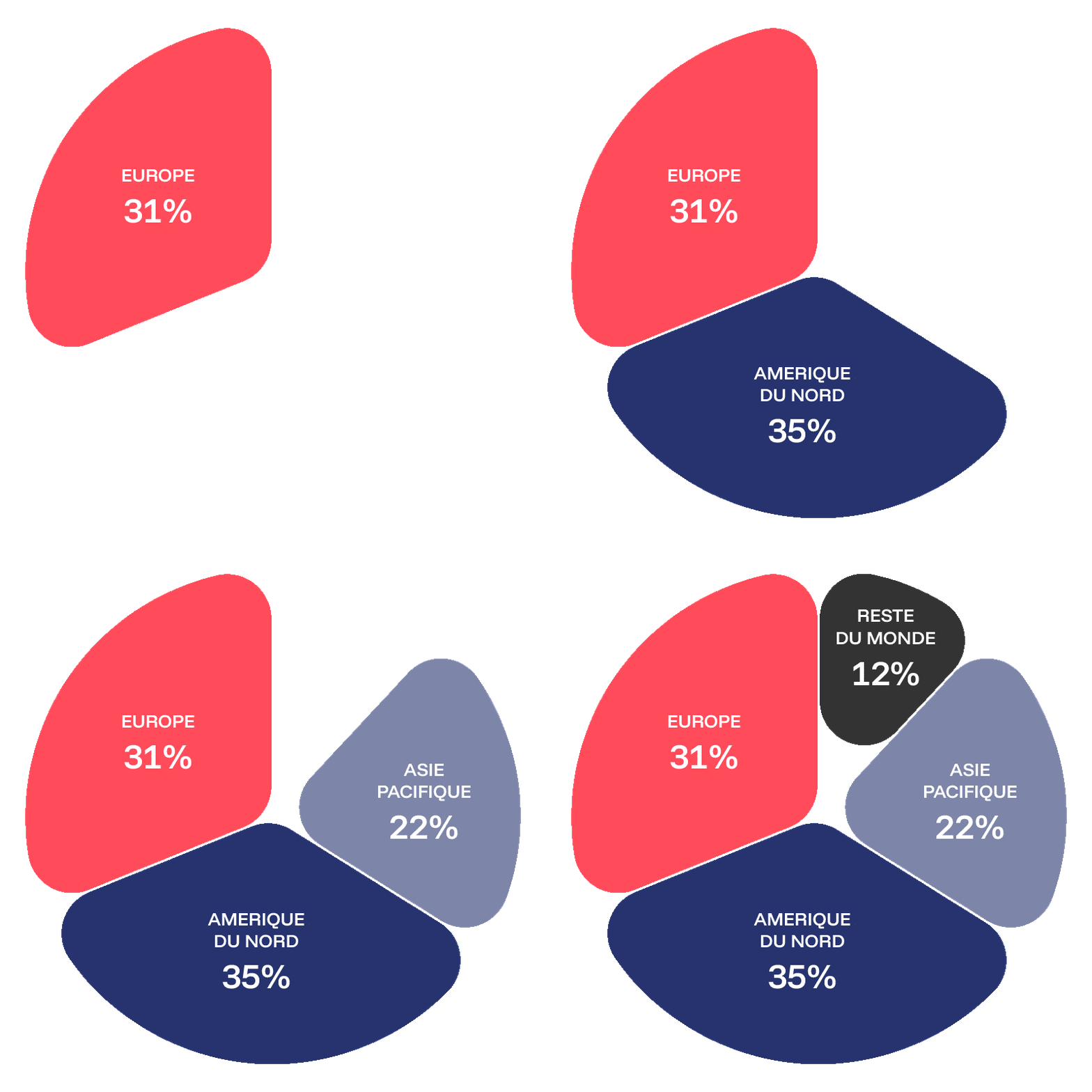
703,420 dental bone graft procedures were performed in key countries (Germany, France, Italy, Spain, England), underscoring substantial demand across the continent.
The market is particularly dynamic, with 1,651,091 procedures performed, positioning it as the global leader in this field. This robust demand is attributed to an advanced healthcare infrastructure and heightened awareness
of oral and
dental health.
They also demonstrate considerable potential. Brazil, Russia, India, and China collectively performed 1,285,033 procedures, indicating a growing adoption of dental bone grafting techniques in these regions.
The global dental bone graft market is experiencing substantial growth, with a Compound Annual Growth Rate (CAGR) projected between 6.8% and 9.2%, reflecting the increasing significance of bone reconstruction procedures in the dental field.
Co-founder & CEO
Materials Chemistry Engineer
3D Design Engineer
Biological Engineer
Co-founder & Materials Research Director
Co-founder & University Professor, Materials
Co-founder & Research Director, Biology
Co-founder & General Manager
Chief Business Officer
KERVALION is committed to providing innovative medical solutions while minimizing its environmental impact, demonstrating
that medical advancement and ecological responsibility can be harmonized.
KERVALION is committed to providing innovative medical solutions while minimizing its environmental impact, demonstrating
that medical advancement and ecological responsibility can be harmonized.
Local Production and Made in France: We collaborate with local suppliers and service providers to foster the national economy while reducing our carbon footprint. Controlled 3D Printing: manufacturing unique components with optimized resource utilization and reduced waste.
Biosourced Raw Materials: Environmentally and health-friendly materials, limiting the reliance on human bone banks.
.
Optimized Logistics: Reducing the volume and duration of transportation.